2026-11-15
Drooping Eyelids in Your 40s and 50s: Why Eye Surgery Should Weigh Function as Well as Looks
Eyelid drooping in your 40s and 50s can narrow vision and cause tearing. Learn how upper and lower blepharoplasty address both function and appearance, and what to check first.

Drooping Eyelids in Your 40s and 50s: Why Eye Surgery Should Weigh Function as Well as Looks
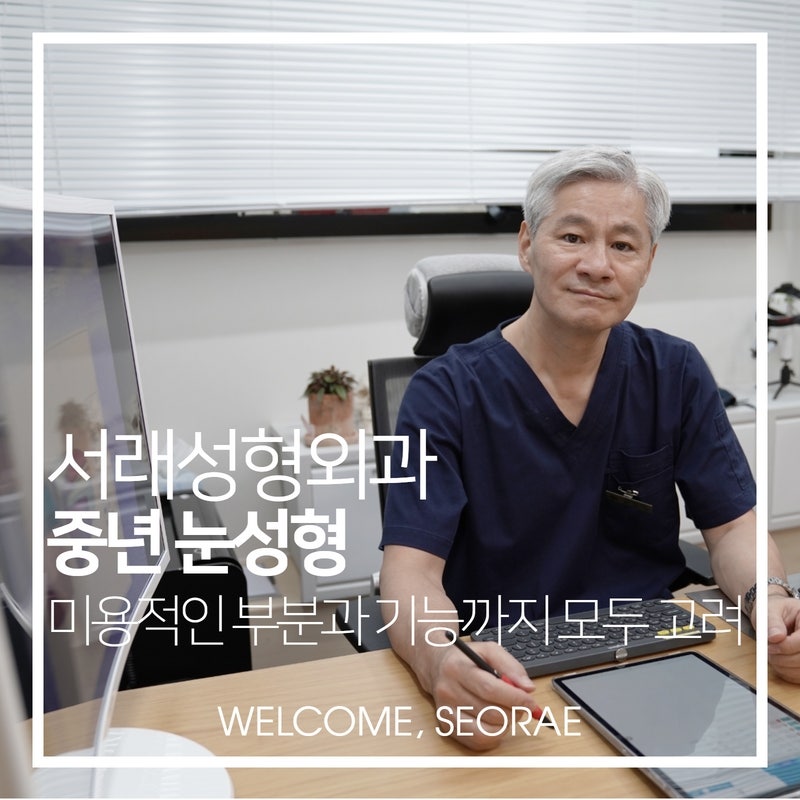
On these hot days, when the cool seaside feels even further away, I'd like to share a few thoughts with everyone who visits Seorae Plastic Surgery today, especially those in their 40s and 50s who are struggling with drooping eyelids! Women in their 20s and 30s also come in for eye surgery consultations, but the sagging and wrinkles that come from declining skin elasticity as we age become especially noticeable, and these concerns are common too.
I'm sure this applies to both men and women: even as we grow older, we hope we won't look too shabby.
We imagine aging gracefully, growing more dignified and beautiful, but the way we actually change tends to leave us with a lot of disappointment.
That is why many people in their 40s and older visit plastic surgery clinics: aging-related eyelid drooping narrows their field of vision and causes discomfort, such as frequent tearing.
You might think, "How inconvenient can drooping eyelids really be?" But once eyelid drooping starts, you will likely face concerns that are completely different from what you imagined.
The discomfort of drooping eyelids can now be effectively improved at plastic surgery clinics!
Upper blepharoplasty, a procedure many people are familiar with, does the following:
It strengthens the muscle that opens the eyes.
It corrects sagging skin and wrinkles around the eyes at the same time.
If the drooping is not too severe, the buried suture technique can still deliver meaningful improvement.
When the drooping is severe and the muscle that lifts the eyelid has weakened significantly, an incision technique is unavoidable.
After upper blepharoplasty, you can immediately see improvement in both the drooping and the vision changes it causes.
Overall, the changed image can also have a positive effect on how others see you, just as much as you feel the difference yourself.

Lower Blepharoplasty, Often Performed Together with Upper Blepharoplasty
Lower blepharoplasty, which people in their 40s and 50s often choose along with upper blepharoplasty, aims to improve drooping not only of the upper eyelid but also of the lower eyelid. When the skin and muscles of the lower eyelid sag, or the fat under the eyes stands out too much, the area can look shadowed and dark, which can give an unfavorable overall impression.
Balancing the improvement of under-eye fat with the sagging skin and muscle can change the shape of your eyes.
Appropriately addressing the fine lines that form under the eyes with age, along with aegyo-sal (the fullness under the lower lashes that shows when you smile), creates a more voluminous eye area and can improve your overall impression.
Since upper and lower blepharoplasty are among the most popular eye procedures for people in their 40s and 50s dealing with drooping eyes, there are a few things to keep in mind!
Accurately assessing each person's skin characteristics is essential when performing upper and lower blepharoplasty.
Consider not just the shape of the eyes, but also the overall change in your appearance and functional aspects.
Choose a design that harmonizes with your own face, rather than one based solely on eye shapes you see online.
Check community reviews and recommendations from acquaintances whose results you can verify in person, then visit for a consultation.
We recommend having surgery performed by a board-certified plastic surgeon with extensive experience and expertise.

The changes in your facial appearance that come with aging are unavoidable.
We may think of it as simply the passage of time, but it's worth taking steps so that the way you change is more harmonious and beautiful.
If you're concerned about drooping eyelids in middle age, consider a consultation at Seorae Plastic Surgery, located on the café street in Seorae Village.
Go to Seorae Plastic Surgery KakaoTalk Consultation
#40sEyeSurgery
#50sEyeSurgery
#40sDroopyEyes
#50sDroopyEyes
#SeoraePlasticSurgery
Frequently Asked Questions
Is drooping in the 40s and 50s caused by aging?
Yes. After the 40s, aging reduces skin elasticity, and the eyes often start to droop as a result. This can narrow your field of vision and cause discomfort such as frequent tearing.
What benefits does upper blepharoplasty offer?
Upper blepharoplasty strengthens the muscle that opens the eyes and corrects sagging skin and wrinkles around the eyes at the same time. Improvements in drooping and vision can be seen right after surgery.
How do buried suture and incision techniques differ in upper blepharoplasty?
If the drooping is not too severe, the buried suture technique can still deliver improvement. When the drooping is severe and the muscle that lifts the eyelid has weakened significantly, an incision technique is used.
Which areas does lower blepharoplasty improve?
Lower blepharoplasty addresses sagging of the lower eyelid skin and muscle, as well as the fat under the eyes that stands out. Balancing under-eye fat with sagging skin and muscle can change the shape of your eyes. Appropriately treating under-eye fine lines and aegyo-sal can create a fuller, more voluminous look.
What should I check before eye surgery?
Accurately assessing your individual skin characteristics is essential. Consider both changes in overall appearance and functional aspects, and choose a design that harmonizes with your own face rather than relying only on online images. Surgery by a board-certified plastic surgeon with extensive experience is recommended.